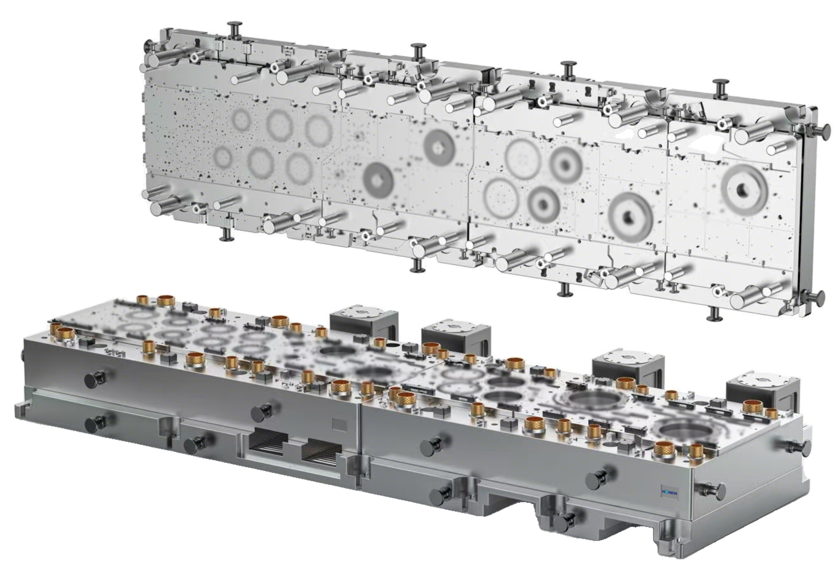
In progressive motor core stamping, strip layout is not simply about material utilization.
It directly determines whether the tooling can run stably at high speed and maintain consistent lamination quality.
A well-designed strip layout must balance several factors simultaneously:
- feeding stability of the strip
- bridge strength between laminations
- distribution of cutting load across stations
- scrap evacuation during continuous stamping
- overall tool length and station arrangement
If these factors are not properly balanced at the strip layout stage, the mould may face issues such as unstable feeding, punch breakage, excessive burr growth, or scrap jamming during production.
For this reason, experienced tooling engineers typically treat strip layout as one of the most critical design steps in a progressive motor core mould project.
Key Factors Considered in Strip Layout Design
Strip Width and Feeding Stability
Strip width determines the rigidity of the material strip during feeding.
If the strip is too narrow relative to the lamination geometry:
- the strip may wobble during feeding
- pilot pins may struggle to position accurately
- high-speed stamping stability can be affected
Therefore, strip width is often optimized not only for material utilization but also for feeding stability.
Bridge Strength Between Laminations
In progressive dies, laminations are connected by small bridges until the final separation stage.
Bridge design must balance two requirements:
- strong enough to maintain strip integrity during feeding
- weak enough to allow clean separation
If bridges are too thin, premature breakage may occur during stamping.
If they are too thick, separation force increases and tool load rises.
Station Load Distribution
Strip layout also determines how the cutting load is distributed across different stations.
Poorly balanced layouts can cause:
- excessive load on certain punches
- accelerated wear of carbide inserts
- increased risk of punch breakage
A balanced station design helps extend tool life and maintain consistent stamping quality.
Scrap Evacuation
Scrap generated during progressive stamping must exit the die smoothly.
Strip layout directly influences:
- scrap shape
- scrap size
- scrap flow direction
Improper scrap geometry can lead to scrap curling, scrap blocking, or even die damage in severe cases.
When Strip Layout Becomes a Bottleneck in Motor Core Projects
In many motor core projects, strip layout becomes a bottleneck because key design information is incomplete.
Typical missing information includes:
- final lamination geometry confirmation
- electrical steel thickness and grade
- interlock or skew requirements
- stacking method
- production speed expectations
Without these parameters, strip layout cannot be finalized accurately, which delays the entire tooling design process.
Our Typical Strip Layout Workflow
In our projects, strip layout is usually developed immediately after all critical design information is confirmed.
Once the lamination design data and production requirements are complete, our engineering team typically prepares a preliminary strip layout within 36 hours.
This layout provides several key parameters required for tooling and production planning:
- material utilization rate
- strip width
- feeding pitch
- estimated stamping force requirement
These parameters help customers evaluate both the tooling design and the feasibility of the stamping process at an early stage.
Why Early Strip Layout Improves Project Efficiency
Providing strip layout data early in the project offers several advantages.
First, it allows both the tooling supplier and the customer to confirm whether the stamping process is realistic under the expected production conditions.
Second, parameters such as strip width, pitch, and stamping force are essential for selecting appropriate press capacity and coil width.
Finally, early strip layout validation reduces the risk of design revisions later in the tooling project.
Conclusion
Strip layout plays a decisive role in progressive motor core mould design.
Although it is often perceived as a step focused on material utilization, its real impact goes far beyond that.
Strip layout affects feeding stability, scrap evacuation, tool life, and overall production reliability.
For this reason, careful strip layout design — supported by complete lamination and production data — is essential for building stable and long-lasting motor core tooling.